
At Agropharm, we specialize in providing expert technical consultancy and building services tailored to the medical cannabis industry. We focus on optimizing every aspect of the production process to ensure high-quality, compliant outcomes. In this article, we explore the critical role of cannabis composition, particularly the fungal elements within the plant’s environment. Understanding cannabis fungus composition is essential for maintaining a controlled cultivation environment, safeguarding product quality, and meeting regulatory standards.
Cannabis composition and the mycobiome
At Agropharm, we understand that the composition of cannabis is much more than just its genetic makeup. The mycobiome, or fungal community within cannabis, plays a crucial role in plant health and product quality. Cannabis hosts a diverse range of fungi, with over 100 species currently identified within its phytobiome. Among the most common are Aspergillus, Penicillium, Fusarium, and Mucor spp. These fungi can interact with the plant in different ways, some beneficial, others neutral, and some harmful.
We recognize the importance of managing these interactions to ensure that cannabis cultivation remains optimal. The composition of the mycobiome can be influenced by many factors, including environmental conditions, cultivation practices, and the plant’s growth stage. Understanding these relationships is essential for preventing contamination and maintaining the health and quality of the final product.
At Agropharm, we provide tailored solutions to optimize fungal management throughout the entire cultivation cycle, ensuring that your cannabis production meets the highest standards of quality and compliance.
Understanding the different fungal types in cannabis cultivation
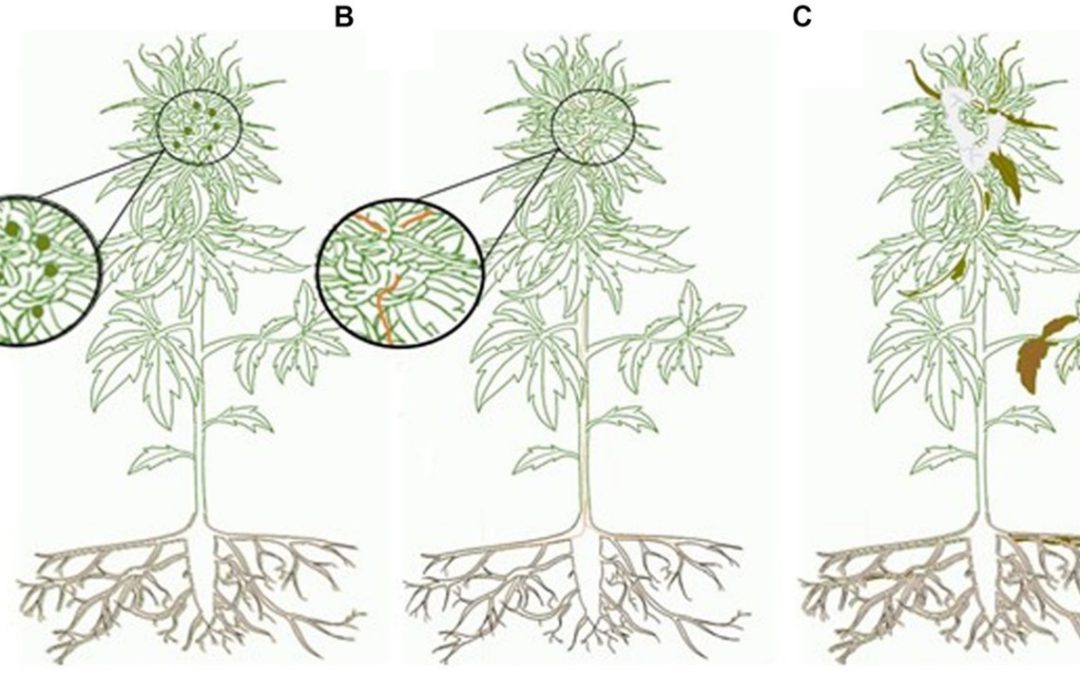
At Agropharm, we emphasize the importance of understanding the different types of fungi that interact with cannabis plants. These interactions can significantly affect both the health of the plant and the quality of the final product. Fungi in the cannabis environment can be categorized into three main types: epiphytes, endophytes, and phytopathogens. Each type plays a distinct role in the plant’s life cycle and requires specific management strategies to maintain optimal conditions for growth.
- Epiphytes: These fungi reside on the surface of the plant. While they may not always cause visible symptoms, their presence can be a concern if conditions favor their growth. Proper air circulation and humidity control are essential to manage these fungi effectively.
- Endophytes: These fungi live within the plant tissues without causing visible damage. They often form symbiotic relationships with the plant, contributing to its health. However, monitoring their levels is important to prevent any potential negative impact on yield or quality.
- Phytopathogens: Unlike epiphytes and endophytes, phytopathogens cause visible damage to the plant. These harmful fungi can lead to diseases that reduce both the plant’s health and its final yield. Agropharm’s approach focuses on preventing phytopathogenic fungi by implementing strict cultivation protocols and maintaining a controlled environment.
Understanding these different fungal types is key to maintaining a healthy, high-quality crop. At Agropharm, we ensure that our clients are equipped with the knowledge and tools to manage these challenges effectively and optimize cannabis cultivation.
How fungal composition affects cannabis quality and compliance
The fungal composition of cannabis plays a significant role in determining both product quality and regulatory compliance. Certain fungi can cause contamination, affecting the safety and efficacy of the final product, which is a major concern in the medical cannabis industry. At Agropharm, we understand the importance of minimizing fungal risks to meet regulatory standards, particularly those related to Good Agricultural and Collection Practices (GACP) certification.
Fungal contamination can not only affect the appearance and taste of cannabis but also pose health risks to consumers. For instance, mycotoxins produced by certain fungi can be harmful when consumed. Therefore, ensuring that fungal levels remain below regulatory thresholds is crucial for maintaining the safety of medical cannabis products.
Our consultancy services focus on helping clients optimize both cultivation and post-harvest processes, reducing the risk of fungal contamination. By applying best practices in environmental control, harvesting methods, and storage, Agropharm ensures that each cultivation facility we work with can meet the highest quality and compliance standards.
Through expert guidance and tailored solutions, Agropharm helps cultivate a safer, more efficient cannabis production process that safeguards both consumer health and industry regulations.
Best practices for mitigating fungal growth during cultivation and post-harvest
At Agropharm, we focus on providing actionable solutions to mitigate fungal growth at every stage of cannabis production. Proper fungal management starts during cultivation and extends through the post-harvest phase. By implementing effective strategies, we help ensure that cannabis remains free from harmful fungal contamination.
During cultivation, controlling environmental factors is key. Reducing humidity levels, improving air circulation, and maintaining optimal temperature conditions can significantly limit fungal growth. We recommend using HVAC systems, dehumidifiers and air circulation systems that promote a dry, well-ventilated environment to prevent the development of pathogenic fungi.
After harvest, managing moisture content is crucial for preventing fungal issues. Drying cannabis properly is essential to ensure that moisture levels are reduced to a safe threshold, which helps prevent the growth of fungi such as Aspergillus and Penicillium. Additionally, storing cannabis in well-ventilated, cool environments helps maintain its quality and limits fungal growth.
Agropharm’s consultancy services provide the expertise to implement these best practices, ensuring that both cultivation and post-harvest processes are optimized for quality, yield, and compliance. By following these practices, we can help ensure that your cannabis production stays healthy and safe from fungal contamination.
The role of specialized consulting in ensuring optimal cannabis fungus management
At Agropharm, we believe that specialized consulting is crucial for managing cannabis fungus composition and ensuring high-quality, compliant production. Our team of experts works closely with clients to design and implement effective fungal management strategies tailored to their specific needs.
By leveraging over two decades of experience in horticulture and medical cannabis, we guide clients through every stage of the cultivation process, from environmental control to post-harvest handling. We ensure that your cultivation facility meets regulatory standards, including GACP certification, and operates efficiently to minimize fungal risks.
Agropharm’s personalized consulting services help mitigate fungal contamination and improve yield, providing the knowledge and tools necessary to maintain both product quality and compliance. With our support, clients can confidently navigate the complexities of cannabis cultivation, knowing they have the expertise to optimize their fungal management practices.
Contact us for expert advice on optimizing cannabis production and managing fungal composition. Our team is ready to help you achieve high-quality, compliant cultivation. Reach out now!

